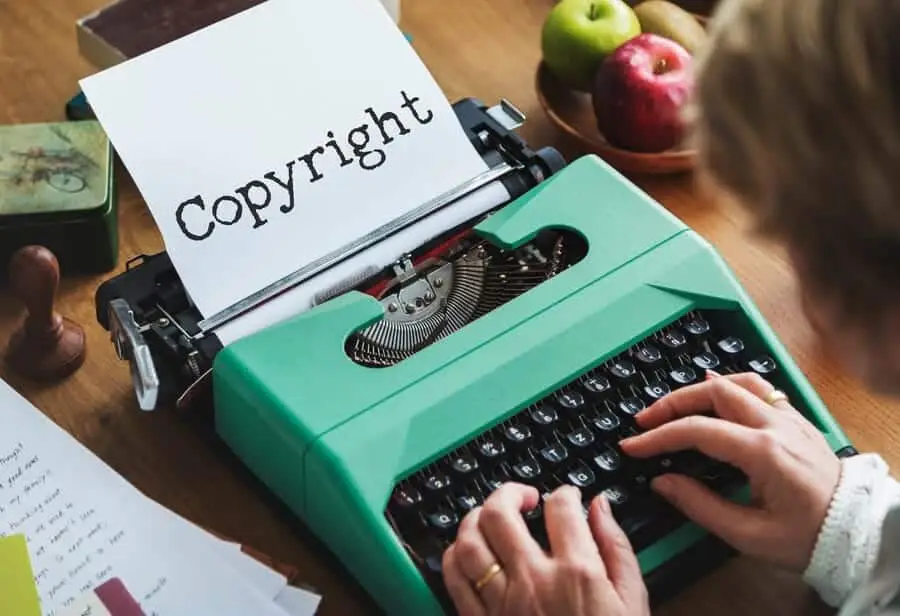
Content does not become free to use just because it is online. Under Article 1 of the Dutch Copyright Act (Auteurswet), the maker has the exclusive right to reproduce the work and to communicate it to the public; the main exceptions are ordinary links to lawfully published content and quotation under Article 15a, and almost every online dispute turns on whether a use reached a new public.
Ar turinio talpinimas internete leidžia juo naudotis nemokamai?
No. A work on a freely accessible website has been communicated to the public by whoever posted it there, but that does not place it in the public domain or license anyone else to reuse it. You may freely reuse only works whose protection has expired (generally 70 years after the maker’s death), works released under a licence that permits it, and material that never attracted copyright protection.
Ar leidžiama dėti nuorodas į kito asmens turinį?
Yes, an ordinary link to a work the rights holder has itself made freely available is not a new communication to the public, because the audience reached is the same. The Court of Justice of the EU confirmed this in Svensson (C-466/12, 2014).
Linking to material the rights holder never authorised can be an infringement if you knew, or should have known, that the source was unlawful. In GS Media (C-160/15, 8 September 2016), a case referred by the Dutch Supreme Court, the Court of Justice held that this knowledge is presumed when you link for profit. A business website must therefore check its sources more carefully than a private blog.
O kaip dėl vaizdų ar vaizdo įrašų įterpimo?
Embedding follows the same logic as linking, with one exception. In VG Bild-Kunst (C-392/19, 9 March 2021), the Court of Justice held that embedding a work by circumventing technical measures the rights holder used to prevent framing is a new communication to the public and requires permission. Copying a photo and uploading it to your own site is always a new use, even if the photo was freely available elsewhere.
Kada galima cituoti kito žmogaus darbą?
Under Article 15a of the Copyright Act, you may quote a work in an announcement, review, polemic or scholarly treatise, or for a comparable purpose. The work must have been lawfully made public, the quotation must be proportionate to that purpose, and the source and the maker’s name must be stated where reasonably possible.
A quotation may include an image, but only where the image itself is the subject of the discussion. Illustrating an article with someone else’s photograph because it fits the topic is not a quotation, and it is one of the most frequent sources of payment claims against business websites.
Ar jums taip pat reikia nuotraukoje matomų žmonių leidimo?
Yes, two separate rights apply. The photographer holds the copyright, so using the photograph requires a licence from them. An identifiable person shown in it may also have portrait rights (portretrecht) under the Copyright Act and can object to publication where they have a reasonable interest, for example when their image is used in advertising. Clear both before you use an image commercially.
Ką daryti, jei jūsų darbas naudojamas be leidimo?
Secure dated evidence of the use, such as screenshots with the URL and date, before you write to anyone. Identify who is publishing the work: the site owner, the advertiser or the platform hosting it. Under Article 16 of the EU Digital Services Act, hosting platforms must offer a notice-and-action procedure, which is often faster than a formal claim.
Compensation is usually based on the licence fee you would otherwise have charged. Courts sometimes add a surcharge where you were not named as the maker. Claims up to €25,000 can go to the subdistrict court (kantonrechter).
What should you check as the rights holder?
- Whether you can prove you are the maker, for example with original files and dates.
- Whether you have secured screenshots of the infringing use with URL and date.
- Who actually publishes the work, and whether a platform notice is faster.
- What licence fee you normally charge for comparable use.
- Whether your name was stated, which affects the amount you can claim.
Į ką turėtumėte atkreipti dėmesį kaip svetainės savininkas?
- Whether you hold a licence for every image and video on your site, and can show it.
- Whether quotations serve review, criticism or a comparable purpose and name the source.
- Whether people shown in photos have consented to commercial use.
- Whether your links lead only to lawfully published material.
- When you receive a claim: whether the amount matches the usual licence fee.
What can we do for you with online copyright?
Pasitelkdami savo įmonių teisės praktiką, galime Jums padėti, pavyzdžiui:
- We assess whether a use of your work, or your use of someone else’s, infringes copyright.
- We draft a cease-and-desist letter and a claim for the licence fee.
- We respond to a payment claim for an image on your website and check the amount.
- We draft licence terms for your content, photos and videos.
- We file a notice with a platform or start proceedings before the court.
Santrauka
- Autorių teisės atsiranda automatiškai; tai, kad kūrinys yra internete arba lengvai randamas, dar nereiškia, kad jį galima laisvai naudoti.
- Ordinary linking to lawfully published material is not an infringement; linking to unlawful material can be, and knowledge is presumed for commercial links (GS Media).
- Embedding is treated like linking, unless it circumvents measures the rights holder used to block it.
- Quotation under Article 15a of the Copyright Act requires a review or comparable purpose, proportionality and a source reference.
- Norint naudoti kieno nors nuotrauką, taip pat reikia gauti visas teises į pavaizduoto asmens portretą.
Dažnai užduodami klausimai
Ar galiu naudoti nuotrauką, kurią radau per vaizdų paiešką?
Ne. Paieškos sistemos indeksuoja vaizdus nepaisydamos jų licencijos, todėl tokiu būdu radus nuotrauką nieko nepasakoma apie tai, ar galite ją naudoti.
Ar man reikia leidimo, kad galėčiau įdėti nuorodą į konkurento straipsnį?
Not for an ordinary link to lawfully published content. Check that the material you link to was published with the rights holder’s consent, especially if your site is commercial.
Ar pakanka nurodyti fotografo vardą?
No. Naming the maker is not the same as having a licence. You still need the rights holder’s permission unless an exception, such as the quotation right in Article 15a of the Copyright Act, applies.